
A Complete Guide to Tile Sizes and Layout Patterns
1 July 2026
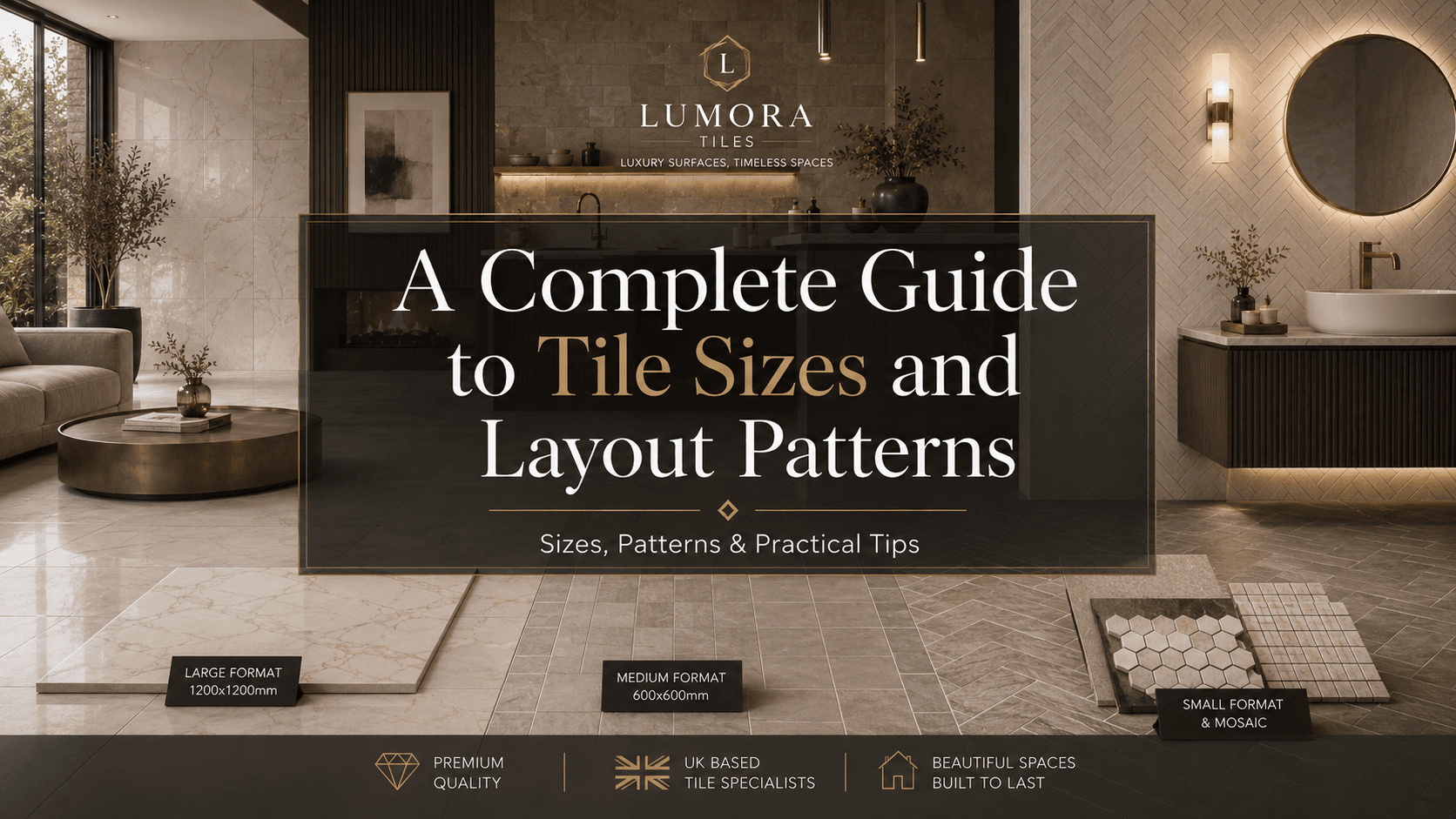
Tile size has a bigger effect on a room than most people expect. Larger formats create a more seamless, contemporary look with fewer grout lines, which can make small rooms feel more open. Smaller tiles, like mosaics, add texture and are better suited to areas with lots of cuts and corners, such as splashbacks or shower niches.
As a rough guide: large format tiles (600x600mm and above) work well in open-plan living areas, hallways, and larger bathrooms. Medium formats (300x600mm to 450x450mm) are the most versatile and suit most kitchens and family bathrooms. Small format tiles and mosaics are best kept for feature walls, splashbacks, and shower floors where drainage falls or tight curves are needed.
Layout pattern matters just as much as size. A straight lay (grid) is the simplest and most cost-effective, and it suits most large-format tiles well. A brick bond (offset by 50%) is a classic choice for metro and subway tiles and works nicely in kitchens. A herringbone or chevron pattern adds a strong visual statement and works especially well with plank-format tiles that mimic wood flooring, though it does use more tile due to cutting and generally costs more in labour.
One practical tip: always dry-lay a small section of tile in your chosen pattern before committing, especially with directional patterns like herringbone. It's the easiest way to confirm you like the look and to fine-tune the starting point before any adhesive goes down.