
Porcelain vs Ceramic Tiles: What's the Difference?
24 June 2026
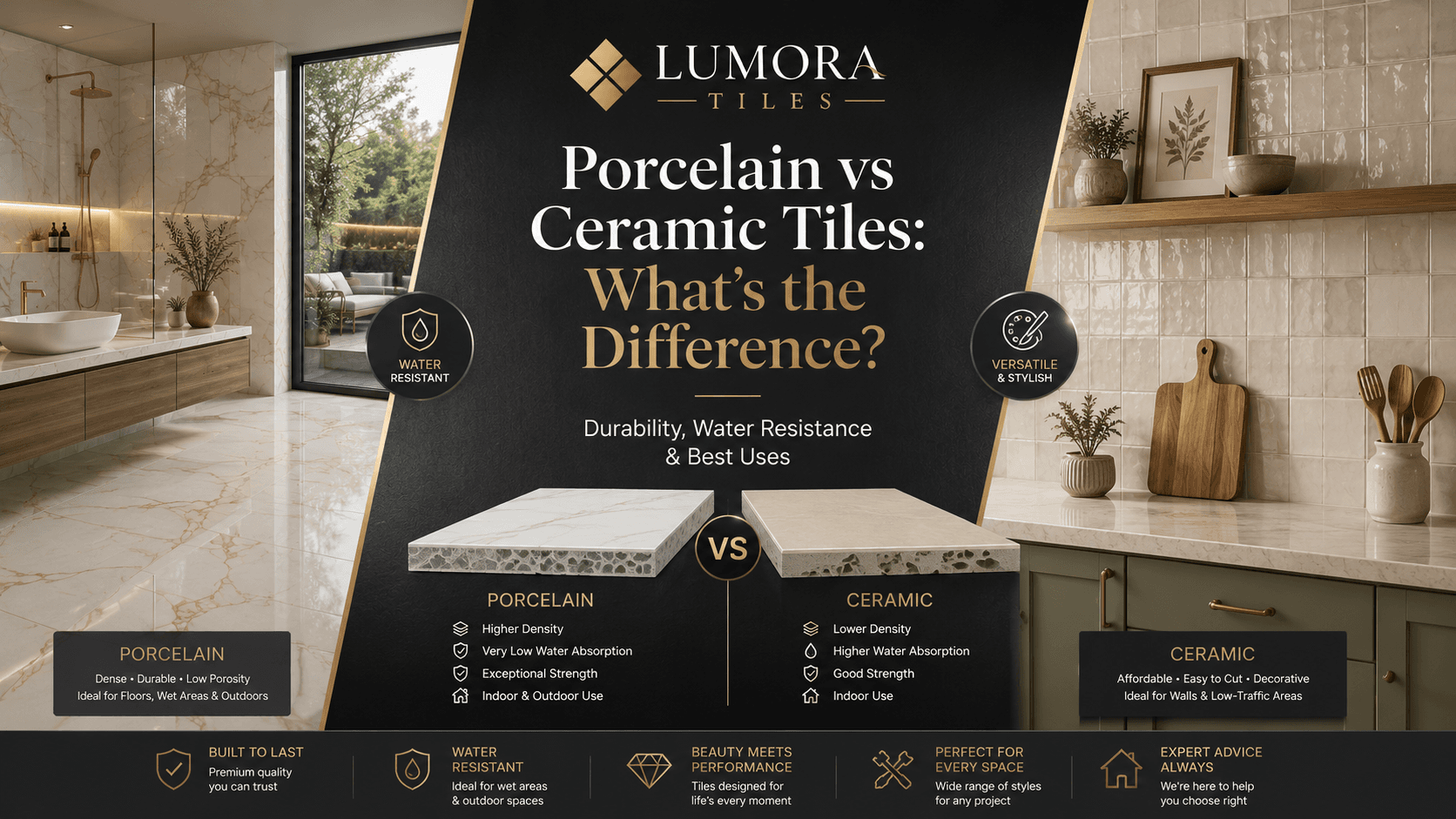
Porcelain and ceramic are both made from fired clay, so it's easy to assume they're interchangeable. In practice, the way they're made creates real differences in durability, water resistance, and price.
Ceramic tiles are fired at lower temperatures and typically use a more porous clay body, finished with a glaze that gives them their colour and pattern. This makes them softer, easier to cut, and generally cheaper. They're a great choice for walls and for lower-traffic floors indoors.
Porcelain tiles are made from a denser, more refined clay and fired at higher temperatures, which makes them harder, less porous, and more resistant to water absorption (usually well under 0.5%, compared to ceramic's 3% or more). That's why porcelain is the standard recommendation for bathroom floors, kitchens, and any outdoor or high-traffic application.
Porcelain also comes in "full-body" or "through-body" varieties, where the colour and pattern run through the entire thickness of the tile rather than just the surface glaze. This means small chips are far less noticeable, which matters in busy areas like hallways and commercial spaces.
The trade-off is that porcelain is denser and harder to cut, so it typically costs more to buy and to install. For most bathrooms, kitchens, and outdoor spaces, though, the extra durability and water resistance are worth it. For a low-traffic bedroom or a decorative wall feature, ceramic remains a perfectly good, more budget-friendly option.